
As we look to the years ahead, we can be sure that supply chain volatility is not going anywhere. There is going to be a continuous need to adopt cutting-edge technologies that can help you be more agile, adaptable, and resilient against any shock to the supply chain environment.
So if you are worried about supply chain issues, supply chain management software solutions can bring you calm. With digital transformation in logistics, you can enable real-time tracking, demand forecasting, and efficient inventory management, reducing delays and costs. By leveraging data analytics and automation, businesses can make smarter decisions, adapt to disruptions, and build resilient supply chains for a competitive edge.
The need for modernization of your logistics operations becomes more critical as businesses and individuals, both are asking for faster, and more cost-effective deliveries.
To navigate an ever-changing supply chain landscape, logistics leaders are turning to technology to enhance global freight networks, predict disruptions, adapt to shifting trade policies and boost reliability. Here are 10 transformative logistics technologies and trends—from advanced data analytics to digital twins and automation—that are driving the future of digital logistics.
Emerging Logistics Technologies Trend in 2025
Each of the following trends are a step towards a smarter, more resilient Supply chain environment, ready to meet the demands of tomorrow’s market. Let us explore how these technologies can redefine logistics operations for a smarter future.
- Artificial Intelligence
- Blockchain
- Digital Twins
- 5G Technology
- Cloud Computing
- Big Data Analytics
- Internet of Things
1. Artificial Intelligence will Become more Essential Part of Ensuring Logistics Resilience
Artificial Intelligence is already an essential part of supply chain management. In fact, the numbers say that the Global AI in Logistics Market size is expected to rise to around USD 549 Billion by 2033, from USD 12 Billion in 2023.

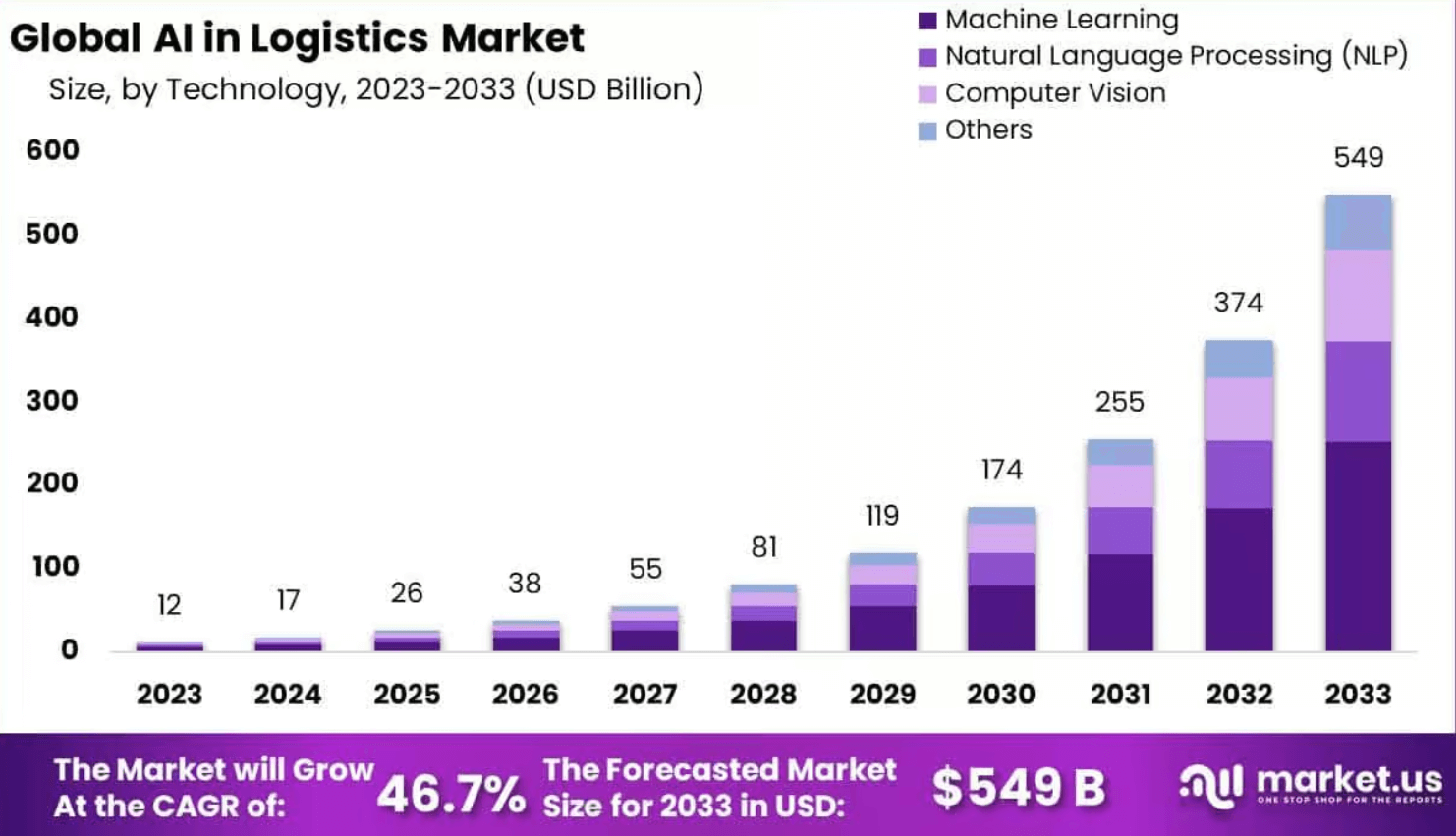
With AI in logistics software you can transform your business. With the power of AI on your side, you can quickly gather data from raw documents, including this which are in non-standardized formats, and structure it for use in logistics processes like customs compliance entries. They also help you to track patterns and take action before challenges arise.
Benefits of AI in Supply Chain
- Improved Warehouse Efficiency: AI automates tasks, optimizes routes, and enhances processes, resulting in lower labour costs and minimized resource usage, leading to significant overall cost savings in supply chain operations.
- Reduced Operating Costs: AI-powered systems reduce human errors by automating data entry and decision-making, minimizing waste through more accurate forecasting, ensuring efficient use of resources, and reducing excess stock and spoilage.
- Fewer Errors and Less Waste: AI-powered systems reduce human errors by automating data entry and decision-making, minimizing waste through more accurate forecasting, and ensuring efficient use of resources, reducing excess stock and spoilage.
- More-accurate Inventory Management: AI improves inventory tracking by predicting demand more accurately, optimizing stock levels, and reducing overstocking or stockouts, ensuring a balanced and well-maintained inventory at all times.
- More-Timely Deliveries: AI optimizes route planning, monitors shipments in real-time, and predicts delays, enabling more precise delivery schedules and quicker response times, improving overall delivery efficiency and customer satisfaction.
- Improved Supply Chain Sustainability: AI identifies inefficiencies, reduces waste, and helps minimize energy consumption in production and logistics, promoting eco-friendly practices by ensuring more sustainable resource usage throughout the supply chain.
- Better Demand Forecasting: AI analyzes historical data and market trends to predict demand accurately, helping businesses plan production, adjust inventory, and avoid both surplus and shortages, leading to optimized supply chain operations.
Implication of Using AI in Logistics Management Solutions
Here are the impacts of using AI in the supply chain:
- Enhanced Efficiency: AI optimizes logistics operations by automating routine tasks, reducing manual errors, and speeding up processes.
- Improved Decision-Making: Predictive analytics powered by AI enables better forecasting, helping businesses anticipate demand and allocate resources effectively.
- Cost Reduction: AI-driven route optimization, inventory, and warehouse operations lowers operational costs.
- Real-Time Visibility: AI provides real-time insights into supply chain activities, improving tracking and transparency.
- Risk Mitigation: AI-powered supply chain management applications can predict potential disruptions and identify alternative strategies to maintain smooth operations.
2. Blockchain: Redefining Transparency and Security
Blockchain is changing logistics by enabling transparency, better security, and an efficient way to track goods across supply chains. Blockchain is a decentralized and immutable ledger that enables real-time access and verification of transaction data, reducing errors and boosting visibility systems while fostering trust among stakeholders.
Benefits of Blockchain in Supply Chain
- Enhanced Transparency: Blockchain provides an immutable, transparent ledger that allows all parties in the supply chain to access real-time data. This reduces fraud, ensures accurate tracking, and enhances visibility into each transaction and movement.
- Improved Security: Blockchain’s cryptographic nature ensures that transaction data is secure, tamper-proof, and auditable. It helps protect sensitive supply chain information from hacking, fraud, and unauthorized changes, ensuring a more secure digital ecosystem.
- Cost Efficiency: By eliminating intermediaries, reducing fraud, and streamlining administrative tasks, blockchain lowers transaction costs, reduces operational inefficiencies, and speeds up processes, leading to significant cost savings for businesses across the supply chain.
- Increased Trust: Blockchain fosters trust by providing transparent, verified, and immutable records accessible to all stakeholders. This encourages collaboration between parties and builds confidence, ensuring that products and data are genuine and trustworthy.
- Real-Time Insights: Blockchain enables continuous monitoring of goods in transit, providing real-time data and status updates. This helps optimize decision-making, improves response times to issues, and allows for better management of inventory and delivery schedules.
Implication of Using Blockchain in Logistics Management Solutions
Here are the impacts of using Blockchain in logistics software:
- Enhanced Transparency: A custom logistics app development company can empower you with real-time tracking capability of freight that ensures visibility into product origins and movement, important for quality control and regulatory compliance.
- Improved Security: The immutable nature of Blockchain protects data from tampering and fraud, safeguarding transactions.
- Streamlined Operations: Smart contracts automate routine tasks like payments and contract execution, reducing delays and reliance on intermediaries.
- Cost Savings: With Blockchain capability, you can reduce errors, fraud, and inefficiencies, lowering your operational costs.
- Trust Building: A decentralized ledger of the Blockchain system builds trust among all supply chain stakeholders by ensuring data accuracy and reliability.
- Risk Mitigation: Blockchain will help you in the identification and resolution of bottlenecks, disruptions, or compliance issues early.
3. Digital Twins: Harnessing Data Science for Supply Chain Excellence
Data science is increasingly transforming supply chains, offering immense opportunities for logistics. Digitalisation and automation enable leading companies to achieve real-time visibility into operations, reducing costs and minimizing errors.
For organisations in warehousing and transport, digital twins—virtual models that replicate real-world objects or processes—offer significant advantages. These simulations copy actual behaviours, allowing businesses to identify and address potential issues before they arise. By optimizing your logistics processes without requiring physical testing, digital twins enhance efficiency and decision-making, making them a game-changer for modern supply chain management.
Benefits of Digital Twins in Supply Chain
- Increase Productivity: Digital twins simulate real-world processes, identifying inefficiencies and streamlining operations, resulting in higher productivity through optimized workflows and resource allocation.
- Optimize Transportation: By modelling transportation networks, digital twins help optimize routes, reduce delays, and improve fleet management, enhancing efficiency and lowering transportation costs.
- Gives Insight into Supply Chain Function: Digital twins provide real-time data on supply chain performance, offering actionable insights to enhance decision-making, forecast trends, and improve overall efficiency.
- Simulation of Emergencies: Digital twins simulate emergency scenarios, allowing businesses to test responses, identify vulnerabilities, and improve preparedness, minimizing disruption during unforeseen events.
Implication of Using Digital Twins in Logistics Management Solutions
- Improved Supply Chain Visibility: It provides a comprehensive view of logistics networks for better planning and performance monitoring.
- Risk Mitigation: It anticipates disruptions and tests contingency plans in a virtual environment.
- Sustainability: The technology helps in optimizing energy use and resource allocation, contributing to greener operations.
- Predictive Maintenance: Monitor assets in real-time to identify and resolve potential issues before they escalate, minimizing downtime.
4. 5G Technology: Boosting Efficiency and Real-Time Connectivity
5G is changing logistics with superfast, responsive connectivity, enabling real-time communication across supply chains. With speeds up to 1,000 times faster and support for a million devices per square kilometer, 5G enables logistics operations to promptly monitor and adapt to changes.
If you have a warehouse, 5G technology will enhance smart device integration, improving real-time inventory management. IoT-enabled smart shelves can alert teams of low stock levels, preventing shortages or overstocking. Its low latency also supports reliable autonomous vehicles and AR tools like smart glasses, boosting efficiency and accuracy in tasks such as order-picking.
Benefits of 5G Technology in Supply Chain
- Seamless Device Communication: 5G enables rapid data sharing across connected devices, ensuring logistics teams stay informed in real-time throughout the supply chain.
- Improved Digital Operations Control: High-speed connectivity enhances the efficiency of digital tools, streamlining operations such as inventory tracking and fleet management.
- Enhanced Automation Performance: 5G optimizes automated systems like drones and autonomous vehicles, enabling faster, safer, and more precise operations in warehouses and logistics environments.
Implication of Using 5G Technology in Logistics Management Solutions
- Enhanced Real-Time Tracking and Visibility: 5G empowers widespread IoT deployment, enabling precise real-time tracking of goods’ location, condition, and security.
- Improved Warehouse Automation: 5G’s low latency is crucial for seamless communication between IoT-enabled automated systems like AGVs and robots within warehouses.
- Optimized Fleet Management: 5G facilitates real-time communication between IoT-equipped vehicles and control centres, enabling dynamic route optimization based on real-time data.
- Predictive Maintenance: Integrating IoT sensors into vehicles and equipment, enabled by 5G’s high bandwidth, allows for real-time data collection on performance and condition.
5. Cloud Computing: Scalable Solutions for Real-Time Efficiency
Cloud computing technology eliminates the need for local servers or physical hardware by enabling data storage and access via the internet. This enables logistics enterprises to scale their storage and computing resources in response to changing demand.
When it comes to logistics service performance, cloud computing facilitates seamless data sharing and collaboration across teams and locations. By centralizing data on secure platforms, it ensures real-time updates, keeping all stakeholders informed and aligned.
This technology enhances warehouse operations by enabling instant monitoring and management of inventory levels and orders. Furthermore, it supports real-time performance tracking, empowering companies to optimize operations without requiring on-site technology investments.
Benefits of Cloud Computing Technology in Supply Chain
- Scalability and Flexibility: Cloud services enable logistics companies to scale resources dynamically based on demand, ensuring efficient performance without overinvesting in physical infrastructure.
- Enhanced Collaboration: With cloud platforms you can facilitate data-sharing in real time with all the necessary stakeholders, improving coordination and decision-making across the supply chain.
- Cost Efficiency: By reducing the need for extensive on-site hardware, cloud computing will help you reduce the capital expenditures and maintenance costs.
Implication of Using Cloud Computing in Logistics Management Solutions
- Enhanced Data Analytics and Integration: Freight management companies can leverage supply chain management applications that have cloud capabilities for seamless data integration, enabling logistics companies to derive actionable insights. This will help with better demand forecasting, route optimization, and more.
- Scalability and Flexibility: As one of the emerging logistics technologies, cloud tech can enable your logistics business to scale their resources to match fluctuating demand without overcommitting to infrastructure. This ensures better performance during peak periods.
- Real-Time Collaboration: By centralizing data, cloud platforms will facilitate real-time collaboration among your teams across different locations. This will enhance coordination, customer service, and reduce delays.
6. Big Data in Logistics: Empowering Smarter Operations and Better Customer Insights
Businesses like yours are working towards enhanced business efficiency. In such times, reliable big data analytics has become important in modern logistics operations. With centralized and well-organized data and document processing, logistics providers can find and manage hidden challenges within their systems.
Using historical performance data allows organizations to spot trends and pinpoint inefficiencies at local, regional, and global levels. For instance, the big data team of Walmart Labs tracks all the clickable action on Walmart.com. This helps them to understand what your consumers are buying in-store or online, what is trending on social media channels, impact of local weather deviations affect the buying patterns, etc. By tracking all these events and their intelligent analysis by big data, Walmart can give personalized shopping experience.
Benefits of Big Data Analytics in Supply Chain
- Faster Deliveries: Big data analytics can help you optimize your route planning and schedules, minimize delays and improve delivery times.
- Risk Mitigation: Big data analytics can help you in analyzing trends and disruptions to enable proactive risk management.
- Improved Customer Satisfaction: With real-time updates and reliable order fulfillment, supply chain management companies can help you enhance the customer experience.
- Sustainability: WIth data-driven optimizations in your supply chain, you can reduce waste and carbon footprints.
Implication of Using Big Data Analytics in Logistics Management Solutions
- Enhanced Customer Experience: Big data can provide you predictive insights to improve delivery timelines, order accuracy, and service reliability.
- Risk Management: With proactive identification of risks, like supplier delays or demand fluctuations, it can help you in developing contingency plans.
- Scalability: Big data analytics supports scaling operations efficiently, ensuring agility during peak demand periods or market changes.
7. Enhancing Logistics with IoT: Real-Time Monitoring and Operational Efficiency
In logistics, we find IoT to be a powerful tool for enhanced operational visibility, from monitoring fleet conditions to tracking inventory levels. This real-time connectivity aids logistics teams to stay informed, predict challenges, and make proactive adjustments. Its key application lies in inventory management, where IoT-driven logistics solutions optimize stock tracking and re-fulfillment.
You can get in touch with software development services such as BoTree Technologies to help you with the integration of IoT capabilities into logistics platforms that can enhance functionality and provide advanced tools for real-time monitoring and operational efficiency.
Have you heard about Smart Containers?
The use of IoT-enabled “smart containers” is rapidly growing. As per Drewry, the share of global container inventories equipped with telematics devices is projected to rise from 3.6% in 2022 to 25% by 2026. These smart containers enable real-time tracking, enhancing equipment availability for operators and offering cargo owners greater control over their supply chains.
Benefits of IoT in Supply Chain
- Real-Time Visibility: With IoT automation, you can get constant updates related to your inventory level and fleet status, assisting you in prompt decision making and immediate responses to key issues.
- Predictive Maintenance: An enterprise software development company like can help you integrate IoT sensors in your fleet management systems so that you can track the vehicle health to detect early signs of wear or potential failures. This allows for proactive maintenance, reducing downtime and repair costs.
- Inventory Accuracy and Automation: IoT-enabled smart shelves track product levels and alert staff when stock is low, optimizing restocking and minimizing the risk of stockouts or overstocking.
- Enhanced Route Optimization: With IoT devices, many businesses are already tracking locations in real time. This allows them to adjust routes based on factors like traffic or weather, ensuring timely deliveries and more efficient operations.
Implication of Using IoT in Logistics Management Solutions
- Enhanced Supply Chain Visibility: IoT devices, like GPS trackers and RFID sensors, give you the power to continuously monitor goods in transit, ensuring end-to-end visibility across the supply chain. At the same time, with sensors you can monitor your inventory levels. This implies that now you can reduce overstocking or understocking issues.
- Optimized Fleet Management: IoT integration with the assistance of a supply chain management software solutions provider, can help you analyze traffic patterns and weather conditions in real time to suggest the most efficient routes. Also, the IoT sensors can alert you about fuel consumption and vehicle performance, helping your company adopt eco-friendly practices and cut costs.
- Data-Driven Decision-Making: IoT devices generate vast amounts of data that can be analyzed to improve decision-making processes. At the same time, historical data allows companies to forecast demand, manage resources, and plan more effectively.
Why Do You Need Supply Chain Software Solutions?
Supply chain management (SCM) software makes your supply chain process easy. Here are some of the benefits of using SCM software in your business.
1. Better Output and Coordination
Logistics software for supply chain management can make coordination, communication and collaboration easy. You can use it to work better with your shipping companies, transporters, vendors, and consumers.
2. Enhanced Tracking
With supply chain management software solutions, you can easily track the flow of your inventory. You will also be able to keep an eye on your distributor or supplier activities. Integrating such software into your transportation systems enables real-time tracking of shipments, allowing you to learn about their exact location at any time. This information can also be shared with other stakeholders in the supply chain, ensuring transparency in the supply chain process.
3. Reduced Delays
Are you afraid of delays in your supply chain? Delays in your supply chain will definitely spoil your relationship and reputation which can lead to losses in your business. Similarly, production and shipment delays, and errors in logistics will harm your business. But, custom logistics app development can solve your problems quickly. A major benefit of a logistics app development solution is that it helps in minimizing delays in tasks and quickens the flow of products and information.
4. SCM Software Reduces Costs
If you have to manage your inventory, order shipment, and supply chain processes, you may have to hire more employees. With a supply chain solution, you get the ease to keep a check on your supply chain and other operations from a single location. Efficient management of the supply chain, with a reduced workforce, lowers the overall costs of the supply chain process and minimizes business expenses.
Conclusion
The future of logistics lies in leveraging advanced technologies like AI, IoT, Blockchain, 5G, and cloud computing to streamline operations, improve decision-making, and enhance supply chain resilience. Businesses adopting these solutions can achieve real-time visibility, reduce costs, and deliver superior customer experiences, staying competitive in a dynamic market. Modern logistics software is no longer a luxury but a necessity for navigating the complexities of supply chain management.
Ready to transform your logistics operations? Partner with BoTree Technologies a leading enterprise software development services to develop cutting-edge logistics software tailored to your needs. Contact us today!
Frequently Asked Questions:
- What are the top logistics software trends for 2025?
Here are the top logistics software trends for 2025:
- Artificial intelligence
- Blockchain
- Digital Twins
- 5G Technology
- IoT
- Big Data Analytics
- How can BoTree Technologies improve your logistics operations?
BoTree Technologies specializes in building customized logistics software solutions that transform your supply chain management processes. By leveraging advanced technologies, they help businesses achieve operational efficiency, reduce costs, and stay competitive in an ever-evolving market.
Here’s how BoTree Technologies can enhance your logistics operations:
- Custom Software Development
- Real-Time Tracking and Visibility
- Predictive Analytics
- Blockchain Integration
- Digital Transformation
- Cost Optimization
- Scalability and Flexibility
- Why is AI important in logistics software?
AI is vital in logistics software because it automates processes, enhances decision-making, and improves efficiency. With AI, businesses can optimize route planning, inventory management, and demand forecasting, reducing costs and delays. AI-driven predictive analytics helps anticipate disruptions and allocate resources effectively.
Additionally, AI enables real-time tracking, minimizing errors and ensuring transparency across the supply chain. By streamlining operations and improving accuracy, AI enhances customer satisfaction, supports sustainability, and provides businesses with a competitive edge in the dynamic logistics industry.
- What are the future technologies in logistics?
The future of logistics will be driven by advanced technologies like Artificial Intelligence (AI) for predictive analytics and automation, Blockchain for transparency and security, and Internet of Things (IoT) for real-time tracking and fleet optimization. Digital Twins will enable virtual simulations of supply chain processes, while 5G technology will enhance connectivity for seamless communication. Cloud computing will improve data sharing and scalability, and Big Data analytics will drive smarter decision-making. These innovations promise greater efficiency, cost reduction, and enhanced supply chain resilience.